Any calendar can put a student, an instructor and a tail in the same time slot. The question is whether it knows that tail is on a maintenance hold, that the CFI is already committed, and that last Tuesday's cancellation was never charged.
A schedule that doesn't know those things isn't a schedule. It's a list of intentions.
Every one of these is a scheduling failure that shows up as a revenue number.
An aircraft goes unavailable and the bookings against it don't. The lesson is cancelled at the desk, the slot goes unfilled, and the revenue is gone.
The policy exists. Applying it requires someone to notice, remember and invoice — so most of the time it quietly doesn't happen.
Ground time, briefings and debriefs get delivered and never invoiced, because logging them is a separate task from teaching.
Without utilization visibility, a tail flying well below its potential looks the same as one that's fully booked.
The schedule as the operational source of truth, not a shared calendar.
Instructor already assigned, aircraft unavailable, overlapping reservation — the system refuses the conflict rather than surfacing it at the desk on the day.
Because maintenance tracking is in the same platform, a hold on a tail removes it from the schedule automatically. No aircraft dispatched for a flight it isn't legal to make.
A purpose-built view for whoever is running the day: who's out, who's due back, what's next, what needs attention — instead of interpreting a grid.
A completed lesson generates its billable event, Hobbs time included. Nobody has to remember to invoice, so unbilled hours stop being a category.
Your cancellation policy is applied by the system rather than by whoever happens to notice.
See actual hours per tail against capacity, so the underused aircraft is visible as a number rather than a hunch.
Each base schedules independently while ownership sees one consolidated operational and financial picture.
An honest note, since this is the most crowded category in the market.
Every serious platform in flight training schedules competently. Flight Schedule Pro's dispatch engine in particular has 26 years of refinement behind it and is excellent. If a vendor tells you their calendar is revolutionary, be skeptical.
What differs is what the schedule is connected to. When scheduling, maintenance, billing, compliance and student records are separate systems, the schedule is always slightly wrong — and someone spends their week reconciling the difference. When they're one system, the schedule is the operation.
| What the schedule connects to | Effect when connected |
|---|---|
| Maintenance status | Unavailable aircraft can't be booked; no day-of cancellations from surprises |
| Billing ledger | Flown lesson bills itself; unbilled hours and missed no-show fees disappear |
| Student records | Progress and currency requirements visible at the point of booking |
| Compliance data | Students without current eligibility aren't scheduled into training |
| Utilization reporting | Idle capacity becomes a number somebody can act on |
Real screens from the platform.
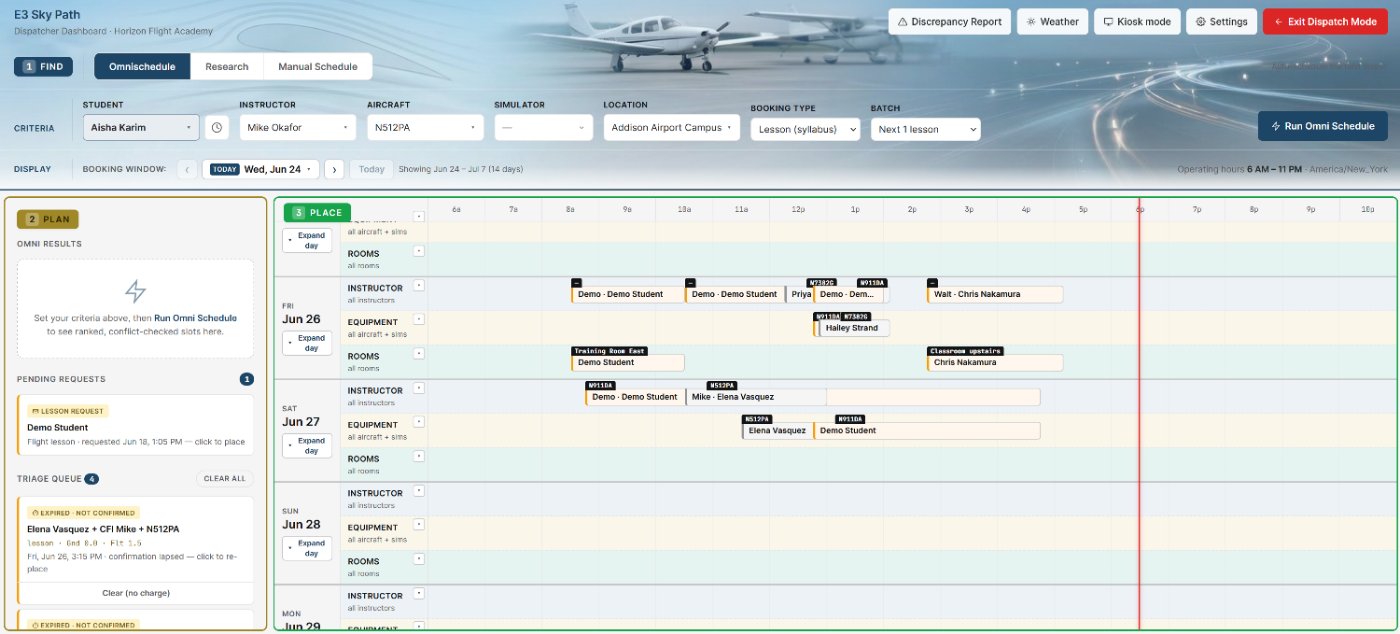
Prevent bookings that can't legally or physically happen — aircraft on a maintenance hold, instructor already assigned, student without current requirements — and generate the billing event when the lesson is flown. If scheduling and revenue are separate records, they will disagree, and the difference is your margin.
Yes, but indirectly. It doesn't create demand; it removes the causes of idle time — double bookings, maintenance surprises, unfilled cancellations, uncharged no-shows — and makes underused tails visible so you can act.
Yes. A completed lesson generates its billable event automatically, Hobbs time included, so unbilled instructor hours and missed charges stop leaking.
Each base runs its own schedule while ownership gets a consolidated rollup. Pricing is per aircraft, so a second location doesn't duplicate your software cost.
Not meaningfully, and we won't claim otherwise — theirs is very good. The difference is that ours is connected to maintenance, billing, compliance and Part 147 programs in one platform. See the direct comparison.
The leakage audit estimates annual losses from idle aircraft, uncharged no-shows and unbilled instructor hours, using your own school's numbers.