International students are among the most valuable enrolments a US flight school can take — and the highest-risk to administer. Eligibility, visa status and document expiries are typically tracked by one person in a spreadsheet, disconnected from the training schedule.
SkyPath keeps that compliance data attached to the student's training record, where it belongs.
None of these are software problems until the day they become very expensive ones.
The person booking lessons can't see whether a student's training eligibility is current. Nothing in the system stops a booking that shouldn't happen.
Visa dates, document validity and eligibility windows sit in a spreadsheet with no alerting. They're discovered late, usually by accident.
The staff member who understands your international pipeline is a single point of failure. When they're away, the knowledge is unavailable.
Compliance and training in one record, not two systems.
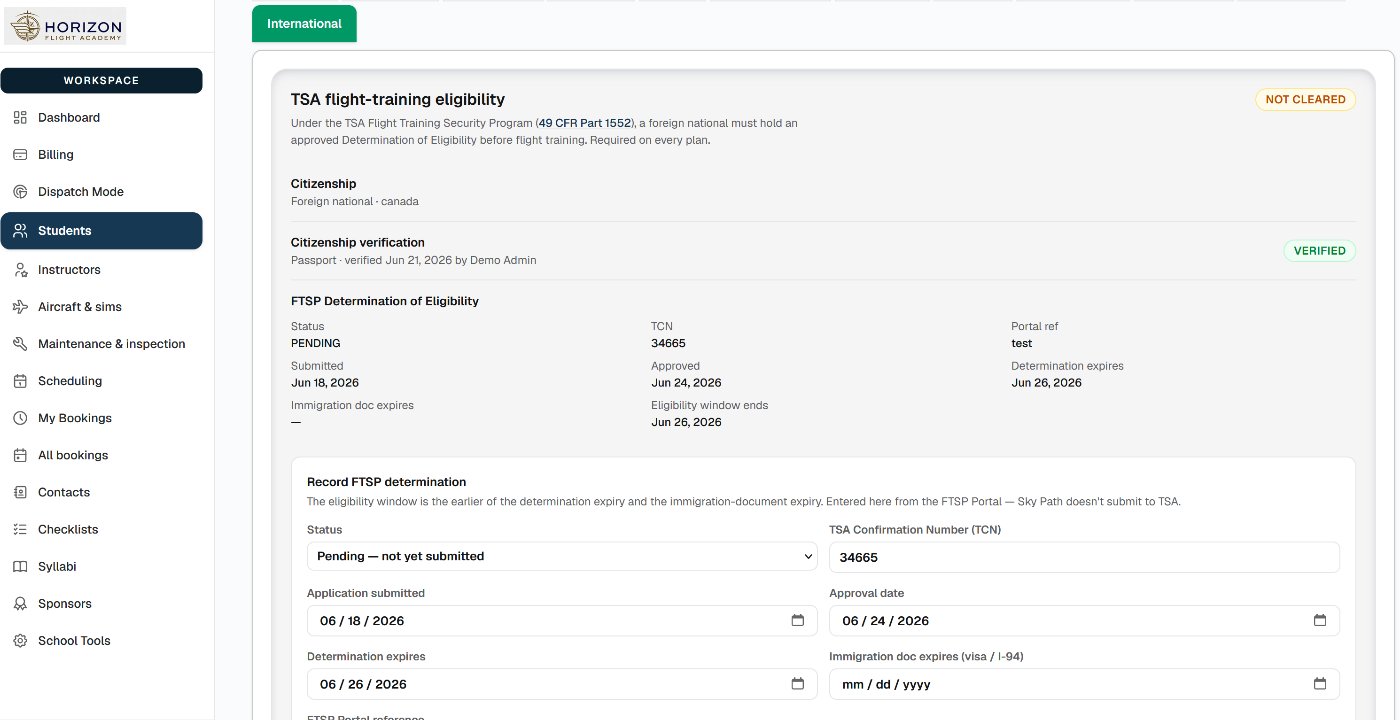
Each international student's eligibility status, category, supporting documents and validity dates are held on their record — visible to the people who schedule training, not buried in a folder.
Store SEVIS details, I-20 information and visa status against the student, so enrolment status and training status are always the same picture.
Documents with end dates are tracked and surfaced before they lapse, rather than found afterwards.
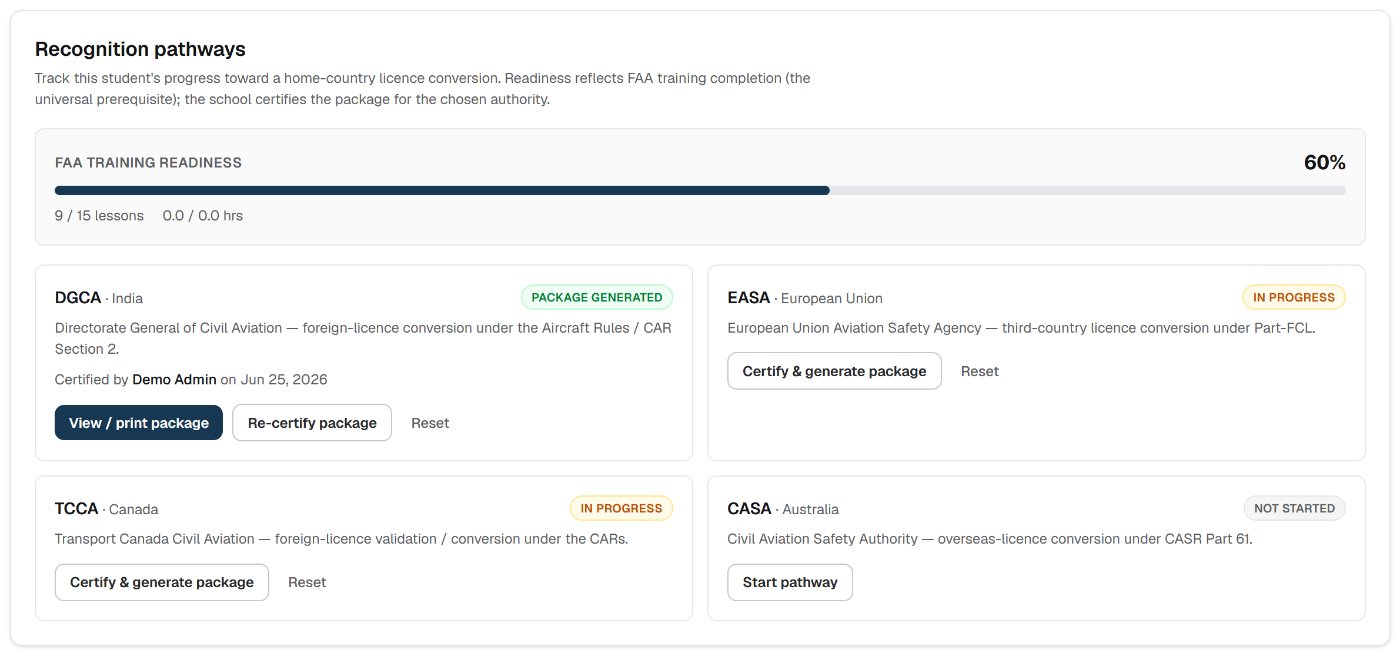
Guidance on the route that applies to a candidate holding a foreign licence, so your admissions staff can advise accurately instead of guessing.
Because compliance lives in the same system as dispatch, a student whose eligibility isn't current isn't quietly booked onto a lesson.
See your international pipeline as a group — who is cleared, who is pending, whose documents are approaching expiry — without rebuilding a spreadsheet each month.
Real screens, not mockups.
Not an oversight — a market-size decision.
International student compliance affects a minority of US flight schools, so the major platforms have reasonably concluded it isn't worth building. That's a defensible product decision on their part, and it means the schools it does affect are left administering it by hand.
| Platform | SEVIS / TSA / conversion workflows |
|---|---|
| E3 SkyPath | Built in |
| Flight Schedule Pro | No |
| FlightLogger | No |
| Flight Circle | No |
| Talon Systems | No |
| Aviatize | No |
Based on public vendor documentation, July 2026. If a vendor has added this since, verify with them directly.
Usually manually, in a spreadsheet kept separately from the training record — which is exactly where gaps appear. SkyPath keeps each student's eligibility status, documents and validity dates on their record, visible to whoever is scheduling training.
Almost none do. SkyPath stores SEVIS and I-20 details, visa status and document expiries alongside the student's training record, so enrolment and training status can't drift apart.
Often yes, depending on the licence held and the certificate sought. SkyPath includes recognition and conversion pathway guidance so admissions staff can advise candidates accurately. The FAA remains the authority on any individual application.
No, and it shouldn't. SkyPath organises and surfaces the documentation. Determinations about status and eligibility stay with your DSO, your counsel and the relevant agencies.
The workflows are part of the platform rather than a paid add-on, so there's no separate cost decision. Even a small international cohort is where a missed expiry does disproportionate damage.
The leakage audit estimates what your school loses annually to manual reconciliation, admin hours and attrition — including the work that keeps international records straight.