Most schools don't fail inspections on how they train. They struggle on whether the paperwork proves it — because records were assembled after the fact, from a filing cabinet, a scheduler and three spreadsheets.
SkyPath generates the documentation as training happens, so preparation becomes a review instead of a reconstruction.
The regulation isn't the hard part. Reconstructing evidence is.
Flight times in the scheduler, progress in a spreadsheet, signatures on paper. Producing one student's complete record means visiting all three and hoping they agree.
Your most expensive instructional staff spend hours assembling documentation instead of teaching or conducting checks.
A missing endorsement or unsigned stage check is discovered during preparation — when there's no time left to correct it properly.
Documentation produced as a by-product of running the school.
Every lesson, flight time, ground session and stage check is recorded as it happens and attached to the student's approved course — not re-keyed later from another system.
See each enrolled student's position in their approved training course, including which lessons and stage checks remain.
Checks are recorded with who conducted them and when, and required endorsements are tracked rather than remembered.
Generated from the student's actual record, retained in the system, retrievable on request.
The correct recordkeeping structure is applied per student based on the course they're enrolled in — so a school running several programs doesn't run several systems.
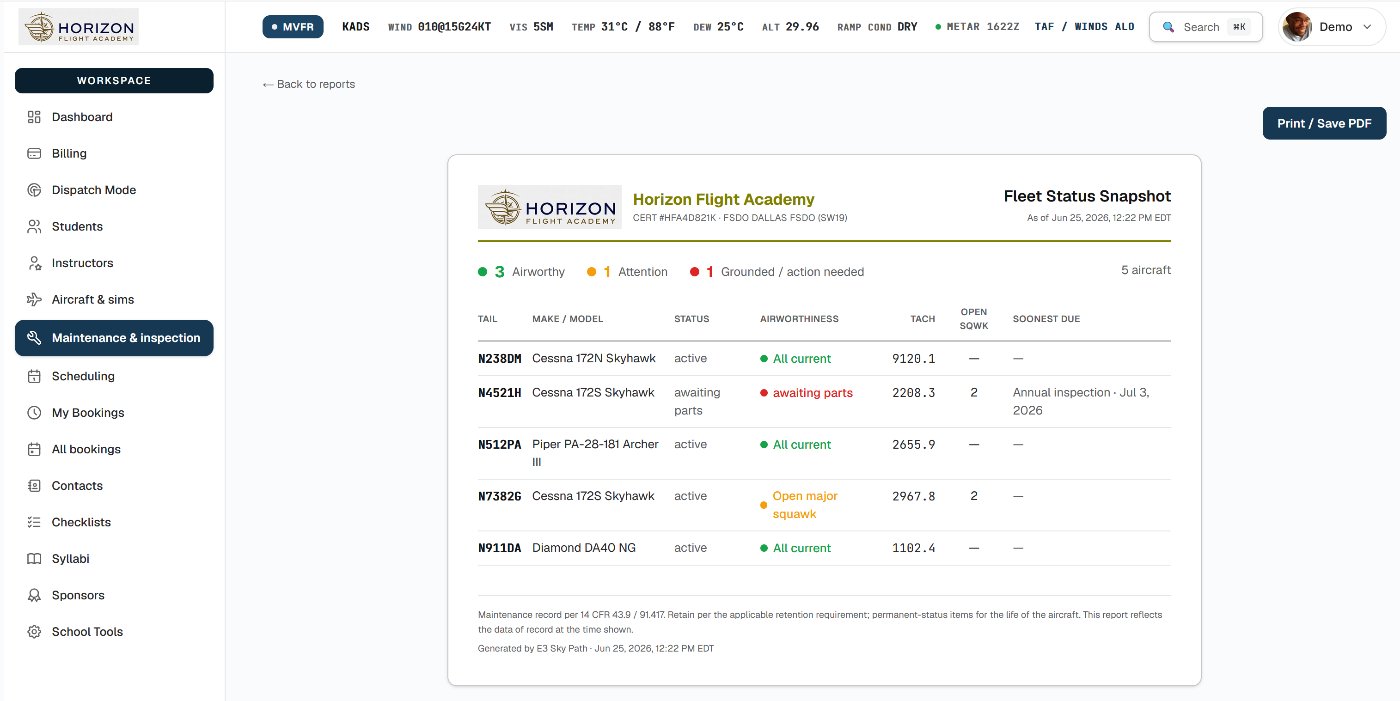
Airworthiness status, FAR 43.9 sign-offs and fleet records sit in the same platform as the training records that reference them.
Summaries and reports that staff normally build by hand are drafted from existing data, then reviewed and signed by a person. The human stays accountable; the typing goes away.
The difference isn't the paperwork — it's when it was created.
| Task | Records in several systems | Records in one system |
|---|---|---|
| Produce one student's full record | Pull from scheduler, spreadsheet and paper file; reconcile disagreements | Open the student |
| Show progress against the course | Rebuild manually from lesson history | Already maintained |
| Locate a stage check signature | Find the physical form | Attached to the record |
| Confirm aircraft airworthiness at a date | Cross-reference maintenance records separately | Same platform as the flight |
| Preparation time | Days of senior staff effort | A review, not a rebuild |
Real screens from the platform.
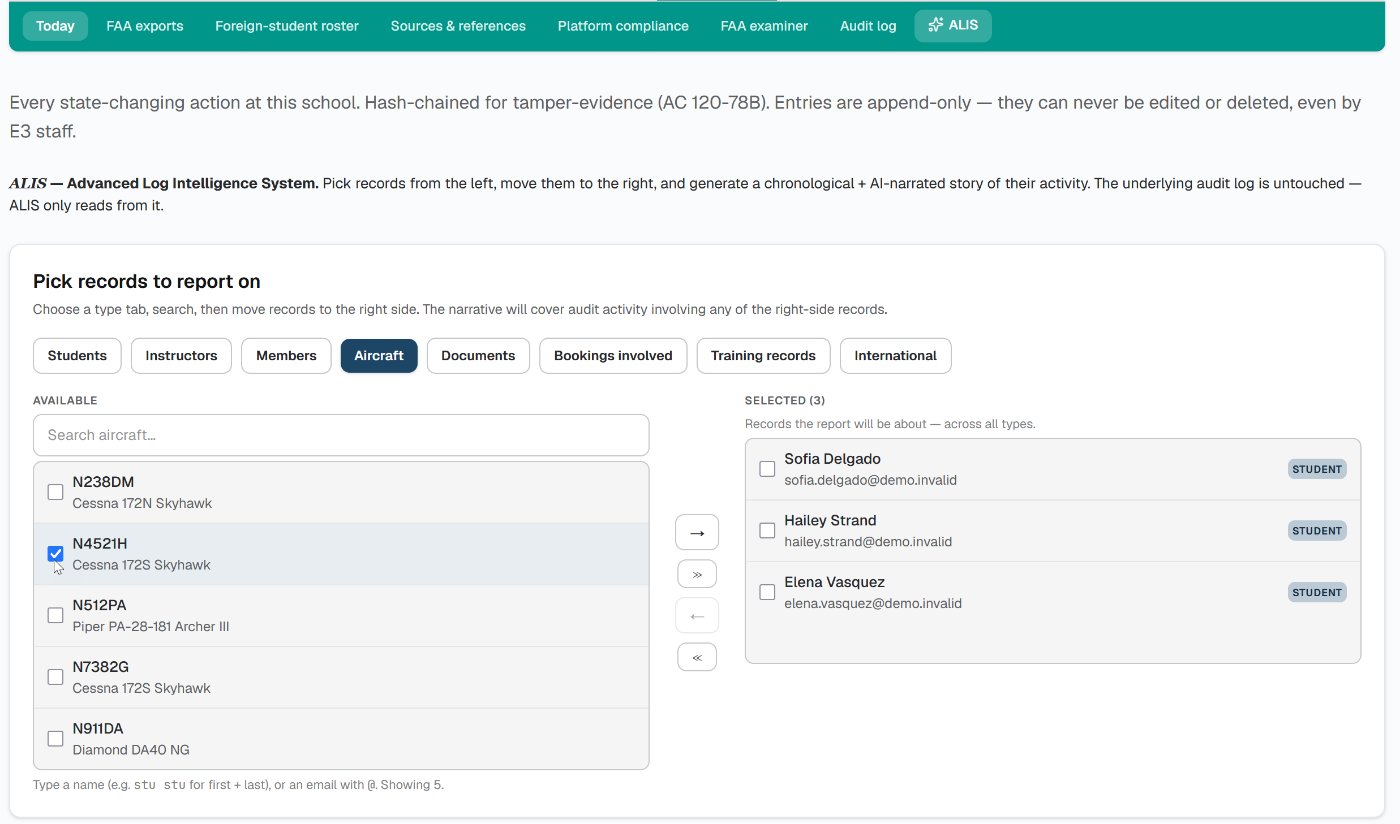
Broadly: each enrolled student's training record showing the approved course, lessons and stage checks completed, their progress against the training course outline, and enrollment and graduation certificates — retained for the period the regulation specifies. The specifics are in Part 141 itself and your FSDO is the authority on how your records are reviewed; we won't paraphrase the reg as if it were advice.
The schools that find inspections uneventful are the ones whose records were already current. If documentation is produced as training happens, preparation is reviewing what exists. If it's assembled afterwards, you're reconstructing months of history under time pressure — which is where gaps surface.
Yes. SkyPath applies the appropriate recordkeeping structure per student based on the course they're enrolled in, so schools running both don't need parallel systems. Part 147 AMT programs are covered in the same platform.
No. It removes the clerical work around that oversight. Judgement, checks and sign-offs stay with qualified people — the system makes sure the resulting records are complete and findable.
Both handle Part 61 and 141 recordkeeping properly, and FSP's documentation structure is well known to inspectors after 26 years in market. The difference is scope: SkyPath also covers Part 147 AMT programs and international student compliance in the same records set. See the full comparison.
The leakage audit estimates what your school spends annually on paperwork, reconciliation and senior-staff admin hours — the cost compliance work quietly carries.